 Viral Post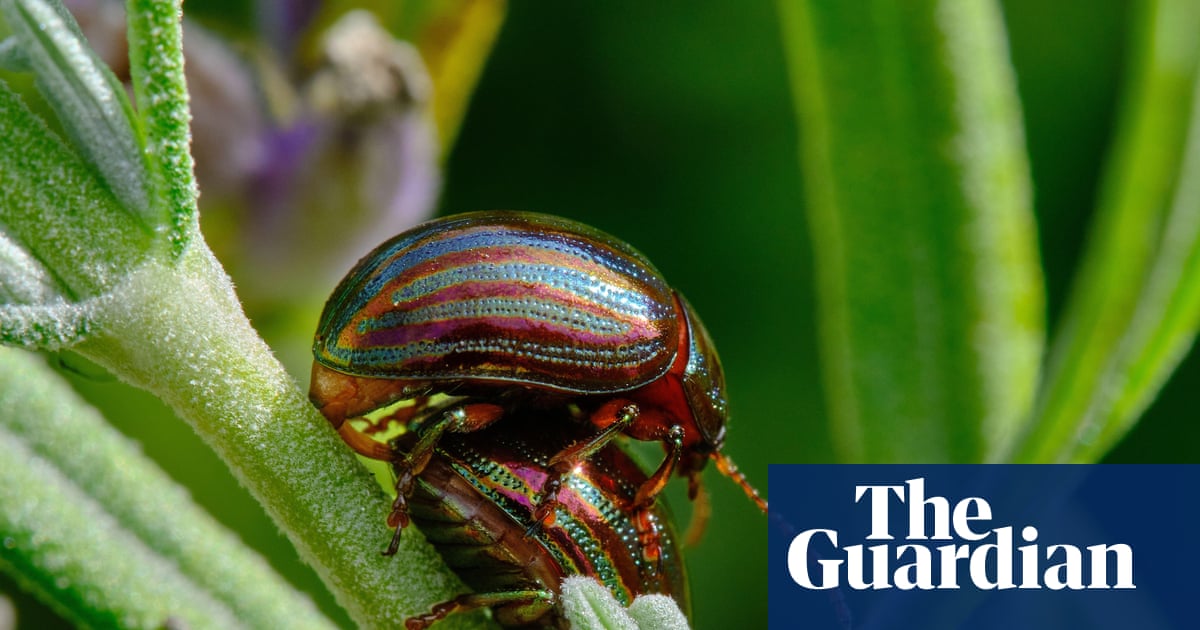
T his year there have been several firsts in my garden: old lady, vestal and blood-vein moths attracted to the light trap; hummingbird hawk-moths , normally occasional, feeding summer-long from verbena and buddleia; and it’s a painted lady year – a once-a-decade event , these high-flying insects migrating from Africa through successive generations. Southerly winds and heatwaves have added to the species visiting my North Pennine garden. Now, in a herb bed, I spot something less welcome.
Among the resinous leaves of rosemary is a gleaming beetle, its elytra striped in purple and green, scintillating like lustreware. It’s not something I’ve seen before, but I immediately know what it means. Rosemary beetle, Chrysolina americana , is a Mediterranean species with no natural predators in the UK.
It is shimmering and beautiful – but can reduce plants of the Lamiaceae family to bare sticks and cause them to die back. This includes my favourites: lavender, sage, thyme – and rosemary. Rosemary beetles were first discovered living outdoors in the UK in 1994 and have increased rapidly since then in our warming climate.
The Royal Horticultural Society is monitoring their spread and has asked for sightings , which I submit. The advice is to hand-pick this non-native invasive species and tolerate “where possible”, seeing them as “as a colourful addition to the garden”. I wonder how rosemary beetles made it to my borders, as they have quite short wings and can’t fly far, preferring to walk, and I’ve propagated all my own herbs.
On a hot autumn day the gleaming beetles are out in force, mating at the top of branches – they particularly like lavender seedheads rather than flowers. Just touching a stem causes them to drop, a defence mechanism common to other beetles, making them hard to spot against the soil. The grubs are dull grey with longitudinal darker stripes, and both larvae and adults feed on the leaves.
Studying the bushes makes me notice other things: cinnamon bugs in their smart finery, seven-spot ladybirds, a garden snail sheltering in a sage leaf, a dramatically patterned cabbage bug, a tiny froghopper. Red admirals flicker over calendulas in this unusual autumn warmth, but there are colder days to come. Rosemary beetles are only likely to survive in my frost hollow if it’s a mild winter.
Source: The Guardian